
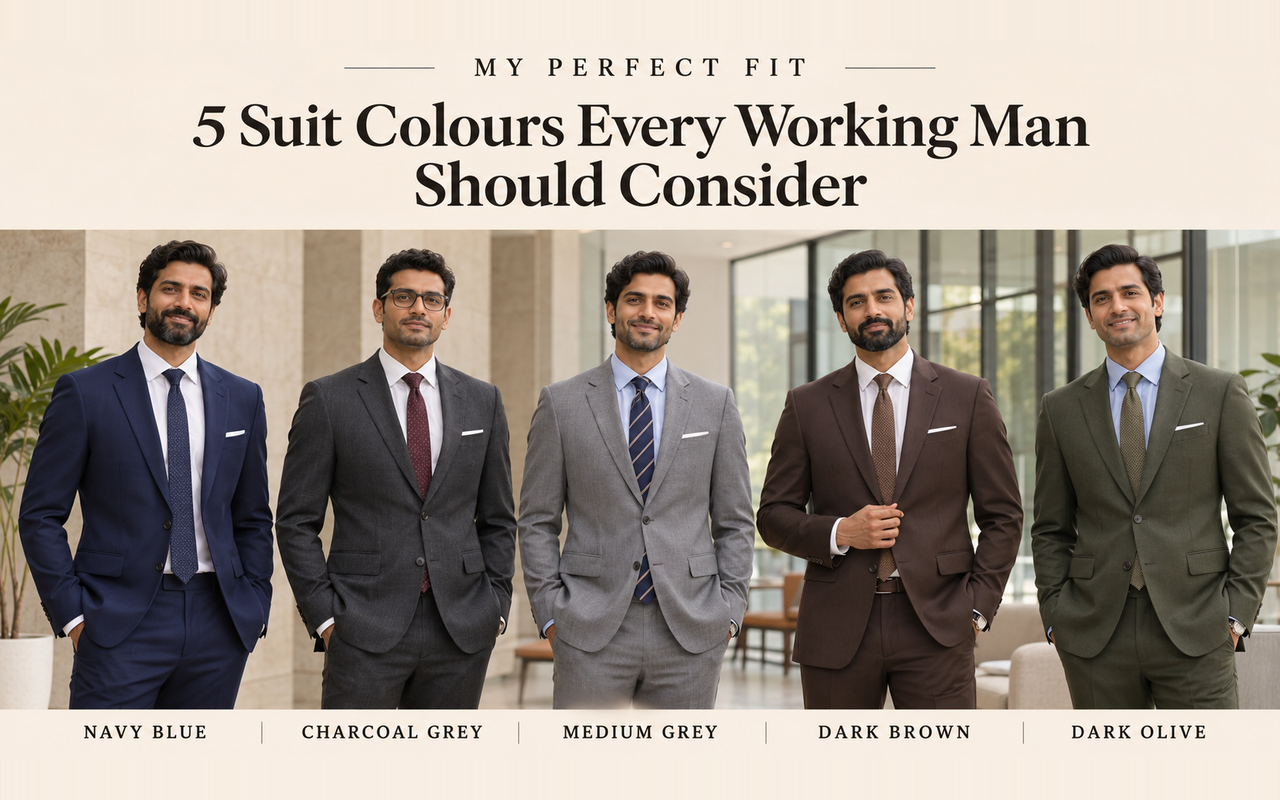
5 Suit Colours Every Working Man Should Consider
Discover five versatile suit colours for work, with practical styling tips to help you build a professional wardrobe around your routine.
A well-chosen suit can make getting dressed for work feel simpler. Whether you are preparing for a client meeting, a presentation or a regular day at the office, the right colour helps you create a look that feels appropriate and personal.
You do not need a wardrobe full of suits to dress well. Start with versatile shades that work with your shirts, shoes and workplace dress expectations, then introduce colours that give you more variety.
From dependable navy to understated brown, here are five suit colours every working man should consider.
1. Navy Blue: A Versatile Starting Point

If you are buying your first work suit, navy blue is a practical place to begin. It works across many business settings and pairs easily with familiar shirt and shoe colours.
Choose a deep navy with a matte finish for maximum versatility. A plain fabric or subtle texture gives you plenty of styling options without drawing attention away from the overall look.
How to Style a Navy Suit
Pair it with a white shirt and black leather shoes for a formal meeting. For everyday office wear, try a pale blue shirt with dark brown shoes. A burgundy tie can introduce colour while keeping the combination understated.
Best for: Client meetings, presentations, interviews and regular office wear.
Why consider it: Navy offers enough flexibility to create several distinct outfits with a small selection of shirts and accessories.
2. Charcoal Grey: Sharp and Understated
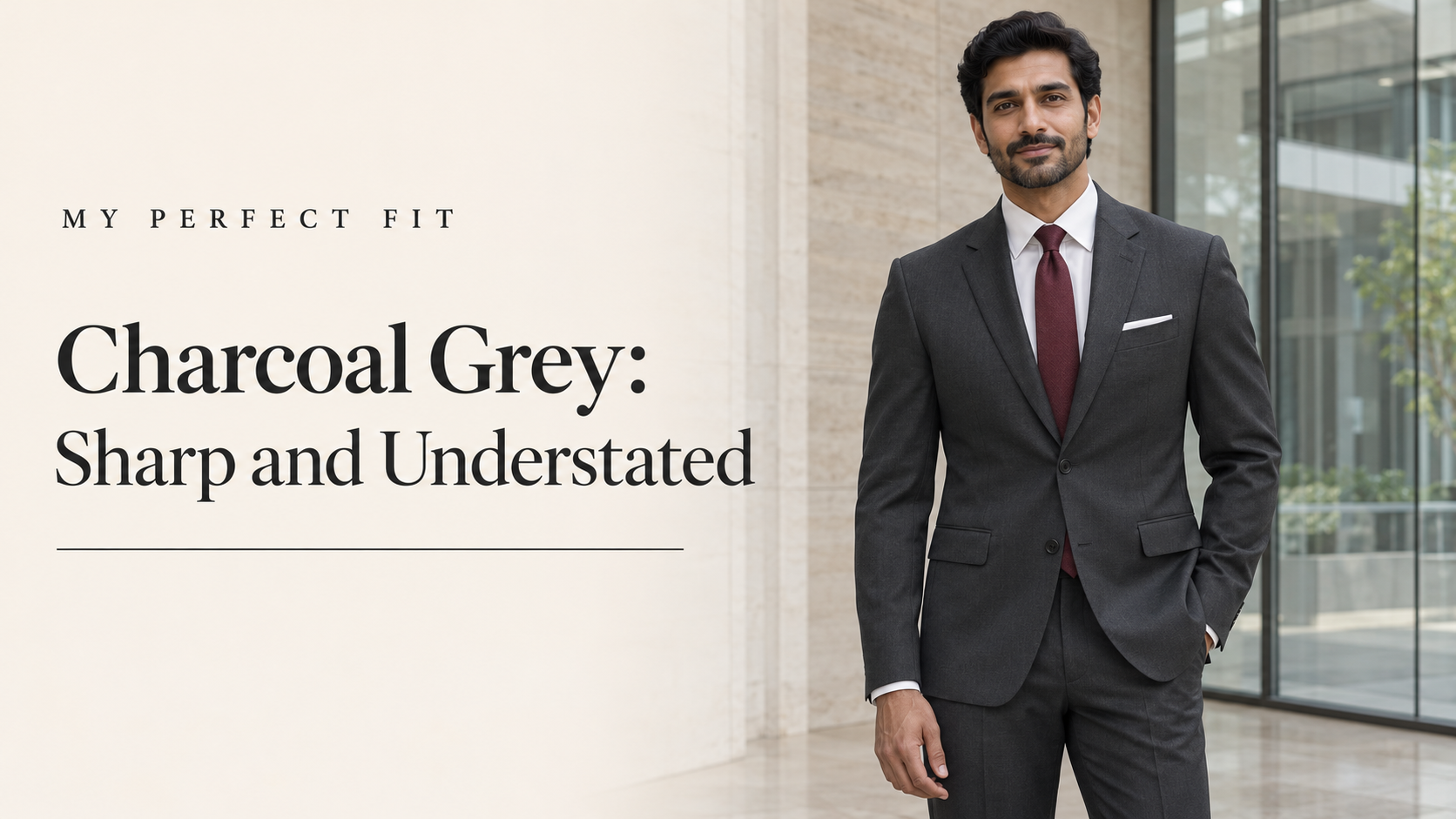
Charcoal grey is another useful foundation for a professional wardrobe. Its depth gives it a formal appearance, while its neutral tone makes it easy to combine with different shirts and ties.
For men who regularly attend important meetings or work in a conservative environment, a plain charcoal suit is a dependable option.
How to Style a Charcoal Suit
Start with a crisp white shirt, black Oxford shoes and a navy or burgundy tie. A light blue shirt creates a softer combination for daily wear.
Keep patterns restrained if the setting is formal. A fine stripe on the shirt or a subtle texture in the tie can add interest without making the outfit feel busy.
Best for: Formal business meetings, interviews, conferences and corporate events.
Why consider it: Charcoal creates a polished look with very little styling effort.
3. Medium Grey: A Flexible Everyday Option

Medium grey adds variety when navy and charcoal are already in your wardrobe. It has a lighter appearance than charcoal and can suit workplaces where tailoring is expected but the atmosphere is less formal.
A medium grey suit also offers a neutral base for experimenting with shirt colours and small patterns.
How to Style a Medium Grey Suit
Wear it with a white or pale blue shirt and black or dark brown shoes. Soft pink and muted lavender shirts are additional options if they fit your workplace.
For a relaxed office setting, you can wear it without a tie. Choose a shirt collar that sits neatly inside the jacket and keep your footwear polished.
Best for: Everyday office wear, daytime meetings and business lunches.
Why consider it: Medium grey brings variety while remaining easy to coordinate.
4. Dark Brown: Warm and Refined
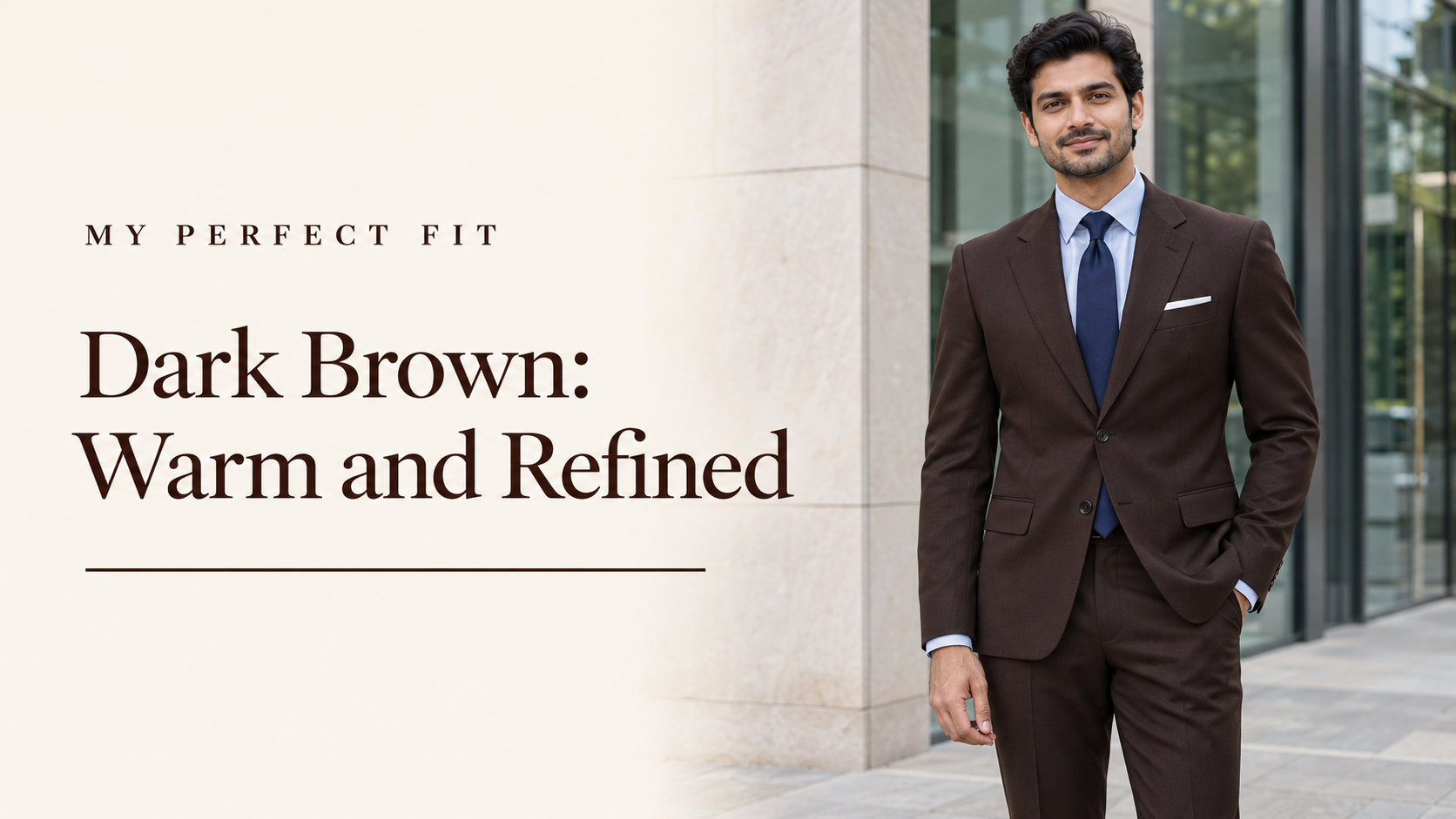
A dark brown suit can make a useful addition once you have your core business colours covered. Shades such as chocolate and espresso offer a warm alternative to navy and grey.
Look for a deep, muted brown in a plain or subtly textured fabric. Consider your office culture before choosing it for highly formal meetings, where navy or charcoal may be the more familiar choice.
How to Style a Dark Brown Suit
Pair it with a white or pale blue shirt and dark brown leather shoes. A navy tie provides contrast, while a muted burgundy tie creates a richer combination.
Keep the shirt lighter than the suit so the outfit retains definition, especially if both your suit and shoes are dark.
Best for: Business lunches, creative workplaces, smart office dressing and professional gatherings.
Why consider it: Dark brown adds warmth and personality without requiring bold accessories.
5. Dark Olive: A Subtle Way to Introduce Colour
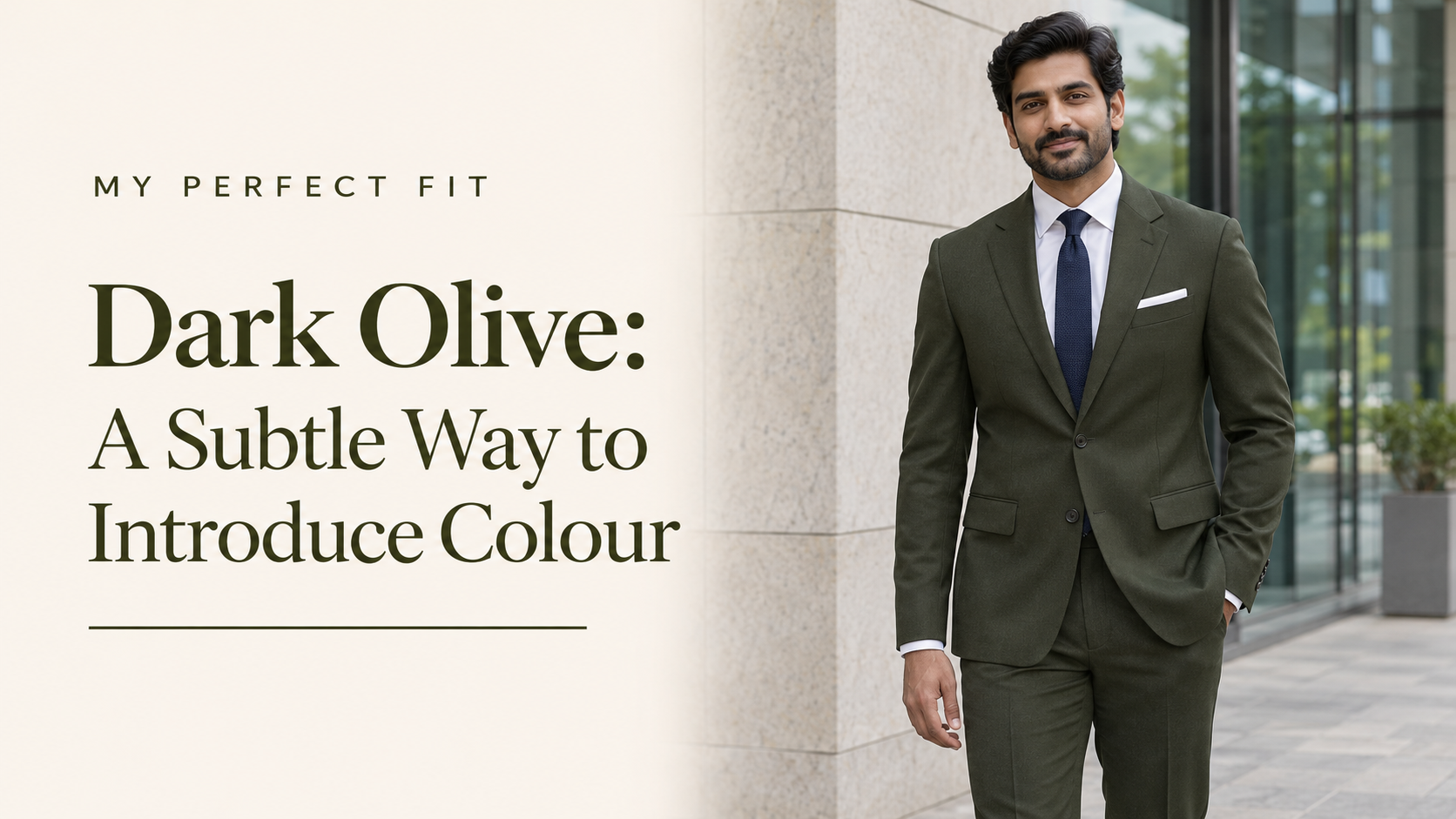
For men who want something different from the usual business shades, dark olive is worth considering. A muted olive can feel understated while giving your wardrobe a distinct change of colour.
Choose a deep tone with a matte finish. Brighter greens and shiny fabrics create a stronger statement, so compare swatches carefully before deciding.
How to Style a Dark Olive Suit
A white or pale blue shirt keeps the look clean. Dark brown shoes work well with olive’s warmer tones, while a navy tie can give the outfit a more businesslike finish.
In a relaxed workplace, an ivory shirt worn without a tie is another option.
Best for: Business-casual offices, creative roles, networking events and less formal meetings.
Why consider it: Dark olive introduces colour while staying easy to wear with neutral wardrobe pieces.
Which Suit Colour Should You Buy First?
Choose according to how often you wear suits and the formality of your workplace.
Your Wardrobe NeedsColour to Consider
One versatile suit for work and meetings
Navy blue
A suit for a conservative business setting
Charcoal grey
An additional suit for everyday rotation
Medium grey
A warmer alternative to your existing suits
Dark brown
A distinctive option for a flexible dress code
Dark olive
If you wear a suit only occasionally, one well-fitted navy or charcoal option may cover most of your needs. If tailoring is part of your daily routine, adding medium grey gives you more ways to rotate your wardrobe.
Brown and olive are useful additions when you want variety and know they suit your workplace.
Look Beyond Colour: Fabric, Fit and Finish
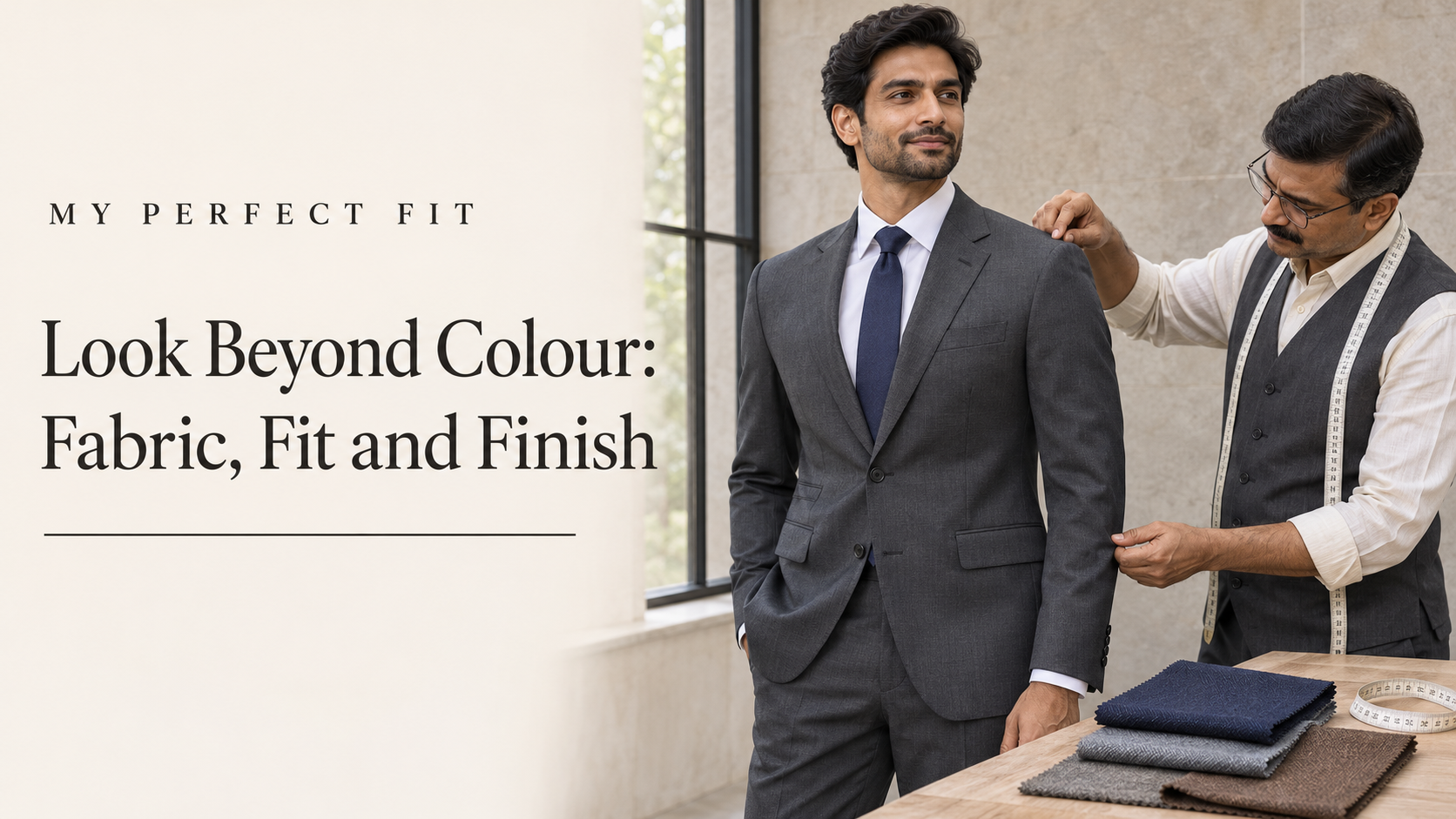
Colour is only part of choosing a work suit. The fabric should suit your climate, commute and hours of wear. Ask about its weight, lining, crease recovery and care requirements before making a decision.
Check the fit while standing and sitting. The jacket should rest neatly across your shoulders and fasten comfortably. Your trousers should allow easy movement through the waist, seat and thighs.
For a versatile office suit, restrained details are often easier to style. A simple single-breasted jacket, proportionate lapels and comfortable trousers can give you a strong foundation for different shirt-and-tie combinations.
Build Your Work Wardrobe With My Perfect Fit

Start with the colours you will wear most often. Navy and charcoal provide a dependable foundation, medium grey adds flexibility, and dark brown or olive can bring more personality to your weekly rotation.
The right suit should fit your routine as well as your body—from the way it feels during your commute to how confidently you wear it into a meeting.
Visit My Perfect Fit to explore suits and discuss your work wardrobe with a stylist.
Frequently Asked Questions
What is the most versatile suit colour for work?
Navy blue is a strong starting point because it pairs easily with white and light blue shirts, several tie colours, and black or brown shoes. Charcoal is another versatile choice, particularly for formal workplaces.
Is a black suit necessary for office wear?
A black suit can work in some professional settings, but you do not need one to build a useful office wardrobe. Navy and charcoal often provide more flexibility for daytime business dressing.
Can I wear a suit without a tie?
Yes, if your workplace dress code allows it. Choose a well-fitting shirt, keep the collar neat and consider the formality of the meeting or event.
How many suits should a working man own?
It depends on how frequently you wear them. An occasional suit wearer may manage with one or two versatile options. If you wear suits throughout the week, a larger rotation gives each suit time between wears.