
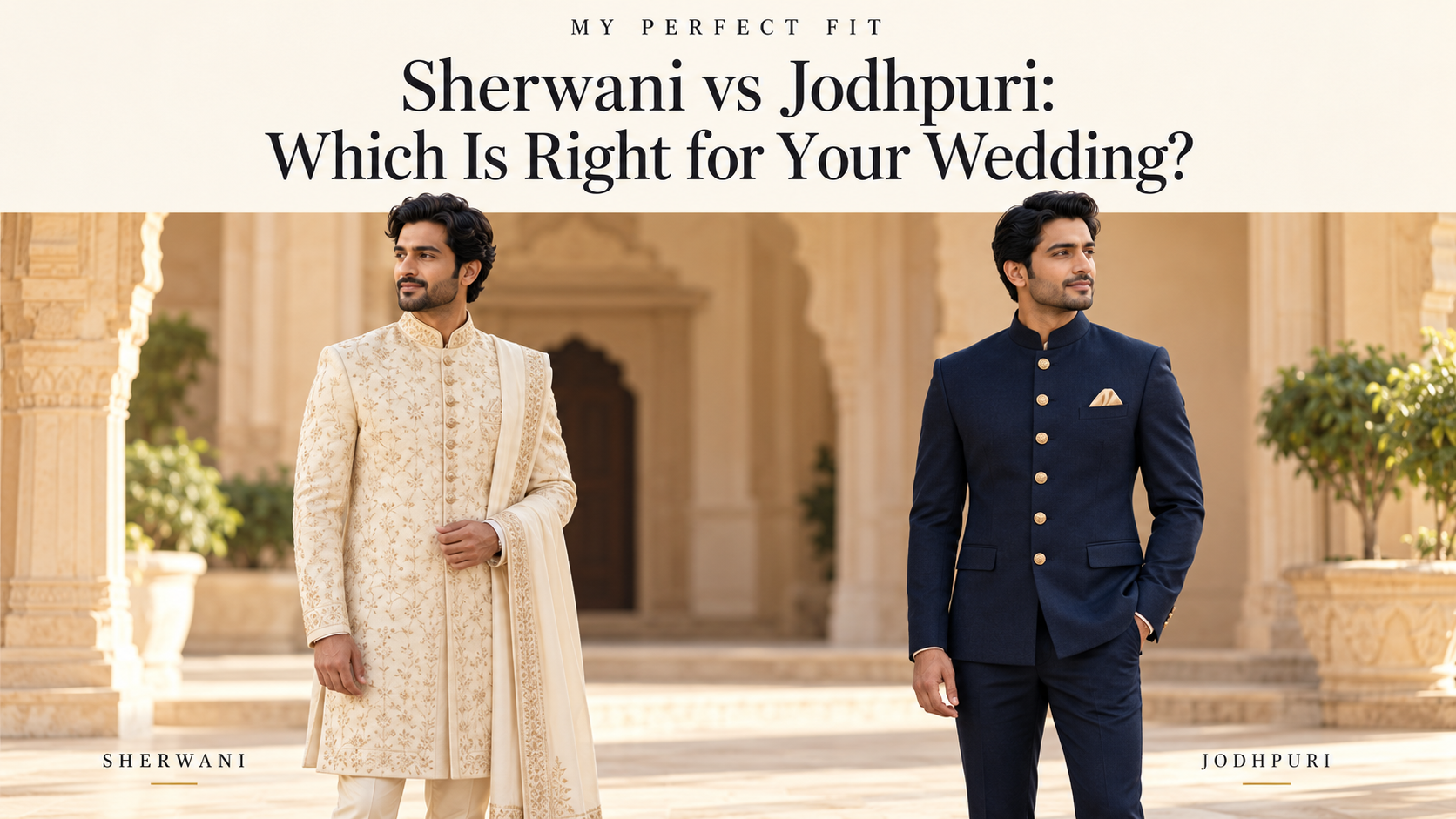
Sherwani vs Jodhpuri: Which Is Right for Your Wedding?
Sherwani or Jodhpuri? Compare silhouettes, styling, comfort and occasion suitability to choose the right outfit for your wedding.
Choosing your wedding outfit is about finding a look that feels right for the occasion—and feels like you. Among the most popular choices for Indian grooms, the sherwani and the Jodhpuri suit offer two distinct approaches to wedding dressing.
A sherwani brings a flowing, traditional silhouette with room for intricate craftsmanship. A Jodhpuri offers a shorter, structured shape with a refined, tailored finish. Both can make a memorable wedding outfit; the right choice depends on your ceremony, personal style and comfort.
Here is how to decide.
What Is a Sherwani?
A sherwani is a long, structured coat traditionally worn over a kurta with coordinated trousers, churidar or another suitable lower garment. It commonly extends to the knee or below, creating an elongated silhouette.
Sherwanis range from plain textured styles to elaborate designs featuring zari, zardosi, threadwork or bead embroidery. A stole, pagdi and traditional footwear can complete the look.
Choose a sherwani if you picture yourself in a traditional groom’s outfit with a strong ceremonial presence.
What Is a Jodhpuri Suit?
A Jodhpuri suit, often called a bandhgala suit, typically features a hip-length, closed-neck jacket paired with tailored trousers. Its appeal comes from clean lines, a structured fit and carefully chosen details.
The jacket may feature decorative buttons, a pocket square, subtle embroidery or a statement brooch. Designs can be understated or richly embellished, depending on the occasion.
Choose a Jodhpuri if you prefer a sharp, tailored outfit with an Indian character.
Sherwani vs Jodhpuri: The Main Differences
FeatureSherwaniJodhpuri Suit
Length
Usually knee-length or longer
Usually hip-length
Silhouette
Long and ceremonial
Compact and structured
Typical Styling
Kurta, coordinated bottoms, stole and optional pagdi
Tailored trousers, pocket square and optional brooch
Detailing
Can accommodate extensive embroidery
Often focuses on fabric, buttons and selective embellishment
Movement
Depends on length, layers and embroidery weight
A shorter jacket may feel easier to move in
Future Wear
Often suited to traditional celebrations
Understated styles can work for other formal occasions
These are starting points. Fabric, construction and styling can make either outfit feel minimal, elaborate, traditional or contemporary.
1. Consider Your Wedding Ceremony
Start with the setting and customs of your celebration.
A sherwani can suit a wedding ceremony where you want a distinctly traditional groom’s look. Its longer silhouette works beautifully with a stole and pagdi, particularly when these accessories form part of your family’s wedding traditions.
A Jodhpuri can be a strong choice for an intimate ceremony, engagement or reception where you want a more streamlined outfit. An embroidered version can also feel suitably celebratory for the main wedding.
If your ceremony requires specific traditional attire, discuss this with your family or officiant before finalising your outfit.
2. Choose the Style You Feel Comfortable Wearing
Think about the clothes you naturally enjoy wearing.
If you appreciate embroidery, layered styling and traditional accessories, a sherwani gives you room to explore those details. You could choose an ivory design with tonal work or introduce colour through the stole and pagdi.
If you prefer crisp tailoring and fewer accessories, a Jodhpuri may feel more familiar. A well-cut jacket in navy, charcoal, ivory or deep green can create a distinctive look through its fit and fabric alone.
Try both silhouettes before deciding. Notice how you stand, move and feel in each one.
3. Coordinate With the Bride’s Outfit
Your outfit should work alongside the bride’s ensemble while reflecting your own style.
A sherwani can complement a richly embroidered lehenga or traditional saree through shared colours, embroidery tones or accessories. For example, an ivory sherwani with antique-gold detailing could pick up the gold work in a red bridal ensemble.
A Jodhpuri can create a clean, structured pairing with a saree, lehenga or contemporary bridal outfit. A midnight navy bandhgala beside a champagne ensemble is one option for an evening celebration.
Bring a photograph or fabric swatch of the bride’s outfit when choosing yours. Compare the actual colours together, especially if you are working with ivory, gold or other subtle shades.
4. Think About the Venue and Weather
Comfort depends on more than the outfit’s name. Fabric weight, lining, fit and embellishment all affect how it feels.
For a warm outdoor wedding, consider lighter fabrics, comfortable lining and restrained embroidery. A heavily embellished sherwani may feel warm, but a thick, fully lined Jodhpuri can also be uncomfortable in the heat.
For an air-conditioned indoor celebration or cooler weather, richer textures and additional layers may be easier to wear.
Ask to feel the fabric and try the outfit with its planned layers before making your choice.
5. Check the Fit and Freedom of Movement
Both outfits need careful fitting.
For a sherwani, check the shoulders, chest, sleeve length and overall length. The front should sit smoothly, and you should be able to walk and sit without the garment pulling uncomfortably.
For a Jodhpuri, pay particular attention to the collar, shoulders and jacket waist. The collar should feel comfortable when fastened, and the trousers should allow easy movement.
During your fitting:
- Sit down and stand up.
- Walk and climb a few steps.
- Raise your arms and bend your elbows.
- Try the footwear and accessories you plan to wear.
- Check your comfort in any posture required during the ceremony.
A wedding outfit should support you through the celebration.
6. Consider Your Budget and Future Wear
Neither style is automatically more affordable. The final price depends on fabric, craftsmanship, embroidery, construction and accessories.
Compare the complete look when planning your budget. A sherwani styled with a stole, pagdi, mala and footwear may involve several separate purchases. A Jodhpuri may require fewer accessories, although elaborate designs can still involve significant craftsmanship.
Also consider how you might wear the outfit again. A restrained Jodhpuri can suit future formal celebrations. A simpler sherwani can also be restyled for traditional occasions with different accessories.
Can You Wear Both?
If you have separate wedding and reception events, wearing both gives each occasion its own identity.
You might choose a traditional sherwani for the wedding ceremony and a tailored Jodhpuri for the reception. Changing the colour, texture and accessories will help the two looks feel distinct.
For example, an ivory embroidered sherwani for the ceremony could be followed by a deep navy Jodhpuri with subtle detailing for the evening.
Find Your Wedding Look With My Perfect Fit
Choose a sherwani if you are drawn to a long, traditional silhouette and ceremonial styling. Choose a Jodhpuri if you prefer structured tailoring and a shorter jacket.
The best decision comes from trying both, considering your wedding customs and choosing an outfit you feel confident wearing.
Explore wedding wear at My Perfect Fit and book a styling appointment to discuss your groom’s look.
Frequently Asked Questions
Is a Jodhpuri suitable for the main wedding ceremony?
Yes, a Jodhpuri can suit the main ceremony if it fits your wedding customs and dress expectations. Fabric, colour and detailing can make the look more celebratory.
Can a sherwani be worn for a reception?
Yes. A sherwani can work beautifully for a reception, especially when you want a traditional evening look. Consider your comfort and how the outfit coordinates with the bride.
Which is more comfortable: a sherwani or a Jodhpuri?
A shorter Jodhpuri may feel easier to move in, but comfort depends on the fabric, lining, embroidery weight and fit. Try the complete outfit before deciding.
Does the groom’s outfit need to match the bride’s colour?
No. You can coordinate through complementary colours, related embroidery tones or a small shared detail.